
Best Digital Web

argsrt

argsrt

Blog

Can AI Replace a Digital Marketing Agency? The Data, Risks and Honest Answer for 2026

Digital Marketing Agency

 A business owner opens an AI tool and types:

“Create a digital marketing strategy for my business.”

Within seconds, the tool produces a 30-day content calendar, a list of keywords, ten advertisement headlines, five email templates and a detailed marketing plan.

It looks impressive.

But one important question remains:

Will any of it actually generate qualified leads, customers and revenue?

That is the real difference between using an AI tool and working with a digital marketing agency.

AI can generate marketing materials at remarkable speed. It can analyse data, create multiple advertisement variations, summarise reports and automate repetitive activities. But marketing success is not measured by how quickly content is created. It is measured by whether the right message reaches the right customer, creates trust and leads to a profitable business outcome.

So, can AI replace a digital marketing agency?

The Direct Answer

AI can replace certain marketing tasks. It cannot independently replace the strategy, market understanding, creative judgement, coordination and accountability provided by a capable digital marketing agency.

It may replace agencies that only:

  • Write basic captions

  • Create generic blogs

  • Schedule social media posts

  • Prepare manual reports

  • Copy competitors’ campaigns

  • Make minor changes to advertisements

However, AI is unlikely to replace an agency that understands the client’s business, develops the offer, studies customer behaviour, connects marketing with sales and takes responsibility for improving performance.

The most effective model for 2026 is therefore not:

AI versus digital marketing agency

It is:

Business expertise + Human strategy + AI-powered execution


AI in Marketing: What the Numbers Actually Tell Us

The current AI conversation contains plenty of excitement, but the numbers reveal a more balanced reality.

75% of Marketing Organisations Are Using AI

Salesforce’s tenth State of Marketing research reports that approximately 75% of marketing organisations use at least one form of AI.

However, only around 13% of marketers are currently using AI agents, which can perform more complex, multi-step activities.

This means that many companies are using AI to complete isolated tasks—such as writing content or summarising reports—but relatively few have integrated AI into complete marketing workflows.

Using AI is now common.

Using it strategically is not.


88% of Organisations Use AI, but Only About One-Third Have Begun Scaling It

McKinsey’s 2025 global AI survey reported that 88% of respondents said their organisations regularly used AI in at least one business function.

However, only approximately one-third of organisations had begun scaling their AI programmes.

This creates an important distinction:

  • Experimenting with AI is easy.

  • Creating measurable business value from AI is difficult.

A company may use AI every day and still have:

  • Poor-quality leads

  • Weak brand positioning

  • Inaccurate tracking

  • Low conversion rates

  • Unclear customer communication

  • Disconnected sales and marketing teams

AI adoption does not automatically equal marketing maturity.


Only 19% Reported Revenue Growth Above 5%

In separate research involving business leaders, McKinsey reported:

  • 19% said AI had increased revenue by more than 5%

  • 39% reported a moderate revenue increase of between 1% and 5%

  • 36% reported no revenue change

  • Only 23% reported a favourable change in costs

These numbers do not mean AI is ineffective.

They show that simply purchasing AI tools or asking employees to use them is not enough. Businesses need appropriate data, trained people, redesigned workflows, clear performance indicators and human oversight.

AI is a capability—not a complete growth strategy.


AI Improved Productivity by 14% in a Large Workplace Study

A major study involving more than 5,000 customer-support agents found that access to a generative AI assistant increased productivity by approximately 14% on average.

The improvement was much greater for less experienced workers:

  • Newer and lower-skilled workers improved by approximately 34%

  • Highly experienced workers received little or no measurable productivity improvement

This finding is highly relevant to marketing.

AI can help inexperienced team members reach an acceptable level of output more quickly. It can provide structures, suggestions, templates and examples.

But experienced marketers already possess something AI cannot easily reproduce:

  • Context

  • Pattern recognition

  • Industry knowledge

  • Customer understanding

  • Commercial judgement

  • The ability to recognise when an apparently good recommendation is wrong

AI can reduce the experience gap. It does not eliminate the value of experience.


AI-Assisted Advertising Can Improve Performance

Meta reported that campaigns using its generative AI advertising features achieved, on average:

  • 11% higher click-through rates

  • 7.6% higher conversion rates

These are meaningful improvements.

However, they do not prove that AI can manage a company’s complete marketing strategy.

AI may improve the advertisement’s background, text variation, placement or audience delivery. It does not necessarily know:

  • Whether the offer is attractive

  • Whether the product is competitively priced

  • Why customers do not trust the brand

  • Whether the sales team responds quickly

  • Whether the landing page answers customer objections

  • Whether the leads are financially qualified

  • Whether the campaign is profitable after operational costs

An advertisement can achieve a higher click-through rate and still generate poor business results.

Clicks are marketing activity.

Revenue is a business outcome.


AI Users Performed 23% Worse on Certain Business Tasks

One of the most useful AI studies involved consultants completing different types of business tasks.

When AI was used for activities within its capabilities, approximately 90% of participants improved their creative performance.

But when participants used AI for a complex business problem outside the technology’s reliable capabilities, their performance was approximately 23% worse than participants who did not use AI.

The same research found that AI-assisted output could reduce the diversity of ideas within a group by approximately 41%.

This is sometimes called the jagged frontier of AI.

AI may perform extremely well on one task and fail on another task that appears almost identical. The danger is that both answers may sound equally confident.

That is why businesses need human reviewers who can tell the difference between:

  • A convincing answer

  • A factually correct answer

  • A strategically useful answer

  • A commercially responsible decision


Infographic 1: AI Marketing by the Numbers

Suggested Infographic Headline

AI Is Transforming Marketing—but Adoption Is Not the Same as Results

Use eight large statistic cards:

NumberInfographic text
75%Marketing organisations using at least one form of AI
13%Marketers currently using AI agents
88%Organisations using AI in at least one business function
Organisations that have begun scaling AI programmes
14%Average productivity improvement in a workplace AI study
34%Productivity improvement among newer and lower-skilled workers
11%Higher average advertisement click-through rate reported by Meta
7.6%Higher average advertisement conversion rate reported by Meta

Footer note for the infographic

Sources: Salesforce State of Marketing, McKinsey Global Survey, NBER workplace research and Meta. Results represent different studies and should not be interpreted as guaranteed performance.


Why This Question Is Often Asked the Wrong Way

Asking whether AI can replace a digital marketing agency is similar to asking whether accounting software can replace a finance department.

Accounting software can:

  • Calculate faster

  • Store records

  • Reduce manual errors

  • Generate reports

  • Automate invoices

But it cannot independently decide:

  • Whether an investment is commercially sensible

  • How the business should respond to declining margins

  • Whether a financial risk is acceptable

  • Which growth opportunity deserves capital

  • Who should take responsibility for a poor decision

Marketing works in a similar way.

AI can accelerate execution, but marketing still requires decisions about:

  • Who the business should target

  • What the business should offer

  • Why the customer should trust it

  • Which platform deserves investment

  • What message should be communicated

  • How the lead should be followed up

  • How success should be measured

  • When a campaign should be stopped or scaled

The real question is therefore:

Which marketing tasks should AI perform, and which decisions must remain under human control?


What AI Can Realistically Replace in Digital Marketing

AI is particularly effective when the work is repetitive, pattern-based, data-heavy or requires multiple variations.

1. First Drafts of Marketing Content

AI can create initial drafts of:

  • Blog articles

  • Social media captions

  • Advertisement copy

  • Email campaigns

  • Product descriptions

  • Video scripts

  • Landing-page content

  • Frequently asked questions

This can reduce the time required to move from a blank page to a workable draft.

However, first drafts are not final marketing assets.

A human editor must still check:

  • Factual accuracy

  • Brand tone

  • Originality

  • Search intent

  • Customer relevance

  • Legal or industry sensitivity

  • Repetition

  • Unsupported claims

  • Cultural appropriateness

AI can solve the blank-page problem.

It cannot automatically solve the relevance problem.


2. Advertisement Variations

Previously, a marketing team may have created five advertisement variations for a campaign.

AI can now help create:

  • 30 headline options

  • 20 opening hooks

  • Different benefit statements

  • Multiple calls to action

  • Image background variations

  • Audience-specific copy

  • Different advertisement sizes

This allows a digital marketing agency to test more ideas in less time.

But AI cannot independently decide whether the business should advertise:

  • A lower price

  • A free consultation

  • A limited-time offer

  • A product demonstration

  • A customer success story

  • A financing option

  • A premium positioning

Those are strategic offer decisions.

The advertisement is only the delivery vehicle.


3. Keyword Grouping and Initial SEO Research

AI can help organise thousands of keywords into categories such as:

  • Informational intent

  • Commercial intent

  • Transactional intent

  • Local intent

  • Branded intent

It can also group keywords by topic and suggest article structures.

However, AI-generated keyword lists may include:

  • Phrases with no meaningful search demand

  • Keywords irrelevant to the business

  • Highly competitive phrases

  • Duplicated search intent

  • Grammatically unnatural combinations

  • Terms that attract the wrong audience

A professional SEO process still requires data from reliable search and analytics tools, competitor review, website analysis and business knowledge.

AI can organise keyword research.

It should not be the only source of keyword research.


4. Reporting and Data Summaries

AI can convert a large amount of campaign data into readable summaries.

For example:

“Lead volume increased by 18%, but qualified leads declined because most new enquiries came from a broader audience segment.”

This is more helpful than sending a client ten screenshots from advertising platforms.

AI can assist with:

  • Weekly summaries

  • Trend identification

  • Campaign comparisons

  • Anomaly detection

  • Performance explanations

  • Dashboard commentary

But the explanation still needs validation.

A decline in leads could be caused by:

  • A tracking error

  • A seasonal change

  • Increased competition

  • A website problem

  • A payment failure

  • A change in the sales process

  • A reduced advertising budget

  • An inappropriate audience

  • A weak creative concept

AI can identify a pattern. An experienced marketer must investigate the cause.


5. Basic Marketing Automation

AI and automation platforms can help businesses:

  • Send immediate lead acknowledgements

  • Assign leads to sales representatives

  • Categorise customer enquiries

  • Trigger follow-up emails

  • Schedule social media posts

  • Summarise sales conversations

  • Update CRM stages

  • Send abandoned-cart reminders

  • Create meeting notes

  • Answer basic customer questions

These are valuable improvements.

But automation must be designed around the customer journey.

Automating a poor process simply allows the business to make the same mistake faster and at a larger scale.


6. Customer-Service Support

AI chatbots can answer routine questions relating to:

  • Working hours

  • Locations

  • Product availability

  • Basic pricing

  • Appointment booking

  • Order status

  • Service categories

  • Frequently asked questions

This can reduce response time.

However, a human should handle conversations involving:

  • Complaints

  • Emotional customers

  • Refund disputes

  • Complex purchases

  • High-value sales

  • Sensitive personal information

  • Negotiations

  • Unusual requests

Efficiency should not come at the cost of customer trust.


What AI Cannot Reliably Replace

1. Understanding Why Customers Actually Buy

A customer rarely purchases because an advertisement contains the perfect combination of keywords.

People buy because they:

  • Trust the company

  • Understand the value

  • Feel their problem is understood

  • Believe the solution is appropriate

  • See enough proof

  • Feel the timing is right

  • Consider the risk acceptable

  • Receive an effective follow-up

These motivations are often discovered through:

  • Customer interviews

  • Recorded sales calls

  • Support conversations

  • Reviews

  • Sales-team feedback

  • Lost-lead analysis

  • On-site observation

  • Industry experience

AI can summarise this information after it is collected.

It cannot independently experience the customer’s hesitation.


2. Creating a Strong Market Position

Consider ten agencies claiming:

  • “We provide innovative solutions.”

  • “We help businesses grow.”

  • “We deliver measurable results.”

  • “We are your growth partner.”

All four statements sound acceptable.

None provides a meaningful reason to choose one business over another.

Strong positioning requires clarity about:

  • Who the business serves

  • Which problem it solves

  • Why its solution is different

  • What evidence supports the claim

  • Which customers it should not target

  • Whether it competes on price, expertise, speed or experience

AI can write a positioning statement.

It cannot guarantee that the position is true, valuable or defensible.


3. Connecting Marketing With Sales

Imagine that an advertising campaign generates 200 leads.

The advertising dashboard looks successful.

But:

  • 70 leads are contacted after more than four hours

  • 40 receive no second follow-up

  • 25 do not meet the budget requirement

  • 20 do not understand the service

  • 15 say the salesperson could not answer their questions

  • Only 5 become customers

Is this an advertising problem, a targeting problem, an offer problem or a sales-process problem?

It may be a combination of all four.

AI inside the advertising platform sees campaign data. It may not see what happened during the phone calls or WhatsApp conversations.

A capable digital marketing agency should examine the complete path:

Advertisement → Landing page → Lead form → CRM → Sales call → Follow-up → Conversion

Generating leads is only one part of growth.


4. Deciding What Not to Do

AI is designed to produce answers.

Good strategy often requires rejecting options.

A business may not need:

  • Every social media platform

  • Daily posts

  • A large influencer campaign

  • Expensive video production

  • Thousands of blog articles

  • A complete website redesign

  • A chatbot

  • More leads

Sometimes the correct recommendation is to fix:

  • Lead response time

  • Product pricing

  • Website trust signals

  • Customer reviews

  • Sales scripts

  • Landing-page clarity

  • Conversion tracking

The value of a digital marketing agency should not be measured only by how many activities it adds.

It should also be measured by how many unnecessary activities it prevents.


5. Taking Responsibility

When a campaign performs poorly, an AI tool does not sit in a review meeting and explain:

  • Why the budget was spent

  • Why lead quality declined

  • Why the strategy failed

  • What assumptions were incorrect

  • What should be changed

  • Who will make those changes

  • How the loss will be prevented

Responsibility remains with people.

This may be the single biggest reason AI cannot completely replace a professional agency.

AI can recommend an action. It cannot be accountable for the result.


A Human Example: The Campaign That Looked Successful

Consider a fictional home-interiors company.

The company uses AI to create advertisements and launches a lead-generation campaign.

After one month:

  • Advertising spend: ₹1,00,000

  • Leads generated: 250

  • Cost per lead: ₹400

  • Sales completed: 2

  • Average project value: ₹2,00,000

The campaign dashboard celebrates 250 leads at ₹400 each.

The business owner is disappointed because only two projects were sold.

A deeper review discovers:

  • 110 leads were looking for minor repair work

  • 50 leads were outside the service area

  • 35 did not have the required minimum budget

  • 30 were contacted too late

  • 15 could not clearly understand the company’s packages

  • 8 remained undecided

  • 2 became customers

The real problem was not simply advertisement performance.

The campaign had:

  • Weak qualification questions

  • Broad geographic targeting

  • No minimum-budget communication

  • Slow sales follow-up

  • An unclear landing page

  • No structured lead-nurturing process

AI could generate better advertisements.

But the business needed someone to diagnose the entire revenue system.

This is where a digital marketing agency should create value.


Infographic 2: The Difference Between Activity and Growth

Suggested Headline

A Successful Advertisement Is Not Always a Successful Business Campaign

Use a funnel design:

Top of Funnel

250 leads generated

Qualification

140 leads removed because of location, service or budget mismatch

Sales Response

30 leads contacted too late

Consideration

78 leads unclear, unresponsive or undecided

Final Result

2 customers converted

Key message below the funnel

The visible metric was ₹400 per lead.
The important metric was ₹50,000 advertising cost per customer.

This is an illustrative example, not an industry benchmark.


AI Tool vs Digital Marketing Agency vs Hybrid Model

AreaAI tools onlyTraditional agencyAI-enabled agency
SpeedHighModerateHigh
Content volumeHighModerateHigh
Business understandingLimited to supplied informationStrong when discovery is done properlyStrong
Original strategyInconsistentStrongStrong
Data analysisFastDepends on teamFast with human validation
Creative judgementInconsistentHuman-ledHuman-led and AI-supported
Cross-channel coordinationLimitedStrongStrong
AccountabilityNoneHighHigh
Cost of repetitive executionLowerHigherMore efficient
Risk of generic outputHighModerateLower with review
Best suited forSimple tasksStrategy and executionScalable modern marketing

The hybrid model is not automatically superior.

It becomes superior only when the agency:

  • Uses accurate business data

  • Reviews AI-generated work

  • Protects the brand voice

  • Measures commercial outcomes

  • Maintains human ownership

  • Uses AI to improve quality, not merely increase volume


The Hidden Costs of AI-Only Marketing

AI tools may appear inexpensive because subscription prices are lower than agency fees.

But subscription cost is not the complete cost.

1. Employee Time

Someone must:

  • Write prompts

  • Supply context

  • Review outputs

  • Correct errors

  • Prepare creatives

  • Upload campaigns

  • Monitor performance

  • Connect tools

  • Maintain data

  • Approve content

An inexpensive tool operated badly can become expensive.


2. Incorrect Decisions

A factual error in a caption may be embarrassing.

An incorrect decision about advertising spend, market positioning or customer targeting can be financially damaging.

The cost of AI is not only what the tool charges.

It also includes the cost of trusting an incorrect answer.


3. Generic Brand Communication

If ten competitors use similar AI tools with similar prompts, their content may begin to look and sound identical.

Common signs include:

  • Predictable headlines

  • Excessive use of the same phrases

  • Generic business advice

  • Artificially enthusiastic language

  • Repeated sentence patterns

  • No original examples

  • No recognisable point of view

Content volume may increase while brand memorability declines.


4. Fragmented Tools

A business may subscribe to separate tools for:

  • Content writing

  • Image generation

  • Video editing

  • Email automation

  • CRM

  • Analytics

  • Chatbots

  • Social media scheduling

  • Keyword research

  • Reporting

These platforms must exchange accurate information.

Without integration, the business creates another problem: more tools, more logins and more disconnected data.


5. Data and Privacy Risks

Employees may unknowingly place confidential information into public AI tools, including:

  • Customer records

  • Internal documents

  • Pricing information

  • Sales data

  • Medical or financial information

  • Unpublished campaigns

  • Business strategies

Every company should establish clear rules about:

  • Which AI tools are approved

  • What data can be uploaded

  • Who reviews AI-generated material

  • How customer information is protected

  • How long information is retained

  • Whether outputs may contain third-party intellectual property


6. Opportunity Cost

The biggest hidden cost may be the time spent producing more marketing material instead of fixing the real business constraint.

A company may create 100 social media posts while its website still has:

  • No clear call to action

  • Poor mobile performance

  • Weak customer proof

  • Unclear pricing

  • Broken forms

  • Slow response times

More content does not repair a weak conversion system.


Can AI-Generated Content Rank on Google?

Yes, AI-assisted content can rank.

Google does not state that content should be rejected simply because AI was involved in its creation.

Google’s guidance focuses on whether content is:

  • Helpful

  • Reliable

  • Original

  • Created primarily for people

  • Supported by experience or expertise

  • Designed to satisfy the searcher’s need

Google also warns that generating large numbers of pages without adding value may violate its policies relating to scaled content abuse.

The important distinction is not:

AI content versus human content

It is:

Useful content versus low-value content

A strong AI-assisted article should include:

  • Original business observations

  • Verified data

  • Expert review

  • Real examples

  • Practical frameworks

  • Clear explanations

  • Updated information

  • A distinctive point of view

  • Proper source attribution

  • Answers to follow-up questions

A weak article usually contains:

  • Rewritten definitions

  • Unsupported statistics

  • Generic statements

  • Repeated keywords

  • No real examples

  • No expert contribution

  • No reason to trust the publisher

The safest content workflow is:

Search intent research → Customer questions → Expert input → AI-assisted structure → Human writing and editing → Fact-checking → SEO review → Publication

Not:

Enter prompt → Copy output → Publish


Infographic 3: The Content Quality Test

Suggested Headline

Before Publishing AI-Assisted Content, Ask These 7 Questions

Use a seven-point checklist:

  1. Does it answer a real customer question?

  2. Does it contain information competitors have not explained well?

  3. Are all numbers and claims verified?

  4. Does it include expert experience or original examples?

  5. Does it sound like our brand?

  6. Would a reader save, share or act on it?

  7. Is it better than the current top-ranking content?

Final line

If the only advantage is that the article was produced quickly, it is probably not ready to publish.


When a Business May Not Need a Full Digital Marketing Agency

A business may initially manage marketing with internal employees and AI tools when:

  • It has one straightforward product

  • The target customer is clearly understood

  • The offer has already been validated

  • The sales cycle is simple

  • Marketing is limited to one or two channels

  • The owner understands basic analytics

  • Advertising budgets are small

  • Leads can be followed up immediately

  • Someone can review every AI-generated output

  • The company is not trying to scale quickly

For example, a local consultant who receives most customers through referrals may use AI to:

  • Prepare LinkedIn posts

  • Draft emails

  • Repurpose videos

  • Plan monthly topics

  • Summarise customer questions

Hiring a full-service agency may not yet be necessary.

The correct decision depends on business complexity—not on hype.


When Hiring a Digital Marketing Agency Becomes Valuable

An agency becomes more valuable when:

  • Advertising expenditure is increasing

  • Lead quality is inconsistent

  • Multiple channels are being used

  • The business lacks a clear market position

  • The website receives traffic but few enquiries

  • Sales teams do not follow up consistently

  • Marketing reports do not connect with revenue

  • The company is entering a new market

  • Customer acquisition costs are rising

  • Content looks similar to competitors

  • Internal employees lack specialist skills

  • Management needs clear ownership and accountability

The more complex the customer journey becomes, the more valuable coordination becomes.


The Four-Level AI Marketing Maturity Model

Level 1: AI as a Writing Assistant

The business uses AI for:

  • Captions

  • Emails

  • Blog outlines

  • Headline ideas

  • Basic research

Business value: Time saved on individual tasks.

Main risk: Generic or inaccurate content.


Level 2: AI as a Production Assistant

The business uses AI for:

  • Content repurposing

  • Advertisement variations

  • Image concepts

  • Video scripts

  • Report summaries

  • Search-intent clustering

Business value: More output with the same team.

Main risk: Prioritising quantity over quality.


Level 3: AI as a Workflow Assistant

AI is connected with:

  • CRM

  • Email marketing

  • Lead assignment

  • Customer segmentation

  • Follow-up automation

  • Campaign reporting

Business value: Faster movement through the customer journey.

Main risk: Automating an ineffective process.


Level 4: AI as a Decision-Support System

AI helps marketers:

  • Forecast performance

  • Identify high-value segments

  • Detect unusual campaign changes

  • Recommend budget allocation

  • Personalise customer journeys

  • Prioritise sales opportunities

Business value: Faster and better-informed decisions.

Main risk: Allowing recommendations to operate without sufficient human review.

Most small businesses are currently between Levels 1 and 2.

Calling a company “AI-powered” because it generates captions with an AI tool does not mean it has an advanced marketing system.


How a Digital Marketing Agency Should Use AI

A modern agency should not avoid AI.

It should use AI responsibly to improve:

Research

  • Analyse customer reviews

  • Group search terms

  • Summarise competitor messaging

  • Identify common objections

  • Organise market information

Creative Development

  • Generate multiple concepts

  • Explore headline directions

  • Adapt content for different formats

  • Build test variations

  • Speed up storyboarding

Campaign Management

  • Detect performance changes

  • Review search-query patterns

  • Create testing hypotheses

  • Support audience analysis

  • Summarise daily campaign activity

Lead Management

  • Categorise enquiries

  • Prioritise follow-ups

  • Prepare call summaries

  • Trigger nurturing sequences

  • Identify repeated sales objections

Reporting

  • Translate platform metrics into plain language

  • Compare performance periods

  • Highlight unusual changes

  • Prepare action-oriented summaries

However, final responsibility should remain with an identified person.

Every important AI-supported process should answer:

  • Who supplied the data?

  • Who reviewed the output?

  • Who approved the decision?

  • Which metric will measure success?

  • What happens if the recommendation is wrong?


The AI-Agency Responsibility Matrix

TaskAI should doHuman should do
Blog creationResearch support, structure and first draftAdd expertise, verify and edit
Advertisement copyGenerate multiple variationsSelect the offer and approve claims
Audience targetingIdentify patterns and segmentsDecide strategic audience priorities
Campaign optimisationDetect trends and recommend changesApprove budget and strategic changes
Customer serviceAnswer routine questionsManage complex or emotional cases
ReportingSummarise numbersExplain causes and decide actions
SEOGroup keywords and identify topicsValidate intent and build authority
Lead scoringPrioritise based on defined signalsDefine qualification criteria
Brand voiceApply documented guidelinesCreate and protect the guidelines
Business strategyProvide options and simulationsMake and own the final decision

How to Decide: AI Tool or Digital Marketing Agency?

Use the following five-question test.

Question 1: Do You Know What Is Currently Not Working?

When the problem is clear and narrow, an AI tool may help.

Example:

“We need to turn one webinar into ten LinkedIn posts.”

When the problem is unclear, strategic diagnosis is needed.

Example:

“We generate enquiries, but revenue is not increasing.”


Question 2: Is the Task Repetitive or Strategic?

Repetitive tasks are strong candidates for AI:

  • Formatting

  • Summarising

  • Categorising

  • Repurposing

  • Generating variations

Strategic tasks require stronger human involvement:

  • Positioning

  • Offer development

  • Market selection

  • Budget allocation

  • Crisis communication

  • Revenue planning


Question 3: What Is the Cost of Being Wrong?

A weak social caption creates limited damage.

An inaccurate medical claim, financial promise, legal statement or large advertising decision can create serious consequences.

The higher the risk, the greater the need for specialist human review.


Question 4: Does the AI Have Access to the Complete Customer Journey?

An AI tool cannot make a complete recommendation when it sees only advertisement data but not:

  • CRM records

  • Sales calls

  • Follow-ups

  • Refunds

  • Customer retention

  • Profit margins

  • Operational capacity

Incomplete data can produce confident but incomplete recommendations.


Question 5: Who Will Be Accountable for the Result?

If no person owns the result, the business does not have a strategy.

It has a collection of tools.


Infographic 4: The Simple Decision Tree

Suggested Headline

Should You Use AI or Hire a Digital Marketing Agency?

Start here:

Is the marketing task repetitive and clearly defined?

  • Yes → Use AI with human review

  • No → Continue

Does the task affect positioning, budgets or revenue?

  • Yes → Use an experienced marketer or agency

  • No → AI may assist

Does AI have complete and accurate data?

  • No → Collect and connect the data first

  • Yes → Continue

Could an incorrect answer damage trust or finances?

  • Yes → Require specialist approval

  • No → Test on a limited scale

Do you need someone accountable for results?

  • Yes → Hire an internal marketing owner or digital marketing agency

  • No → Use a supervised AI workflow


Questions to Ask an AI-Powered Digital Marketing Agency

Before hiring an agency, ask:

  1. Where exactly do you use AI in your process?

  2. Which decisions are made by humans?

  3. Who reviews AI-generated content?

  4. How do you verify facts and statistics?

  5. How will you learn about our customers?

  6. How will you protect confidential business information?

  7. How will leads be tracked from source to sale?

  8. How do you measure lead quality?

  9. Which metrics will be reported?

  10. How will marketing data be connected with sales data?

  11. What happens when a campaign underperforms?

  12. Who is responsible for budget decisions?

  13. How will you maintain our brand voice?

  14. Will we retain access to advertising and analytics accounts?

  15. Can you show how your strategy differs from a generic AI-generated plan?

A genuine AI-enabled agency should be able to explain where technology improves the process and where human expertise remains essential.


Red Flags to Avoid

Be cautious when an agency:

  • Calls itself AI-powered but only uses AI to write captions

  • Produces large volumes of content without customer research

  • Promises guaranteed rankings

  • Focuses only on impressions, reach or follower count

  • Cannot connect leads with sales outcomes

  • Uses the same strategy for every client

  • Publishes content without expert review

  • Does not verify AI-generated claims

  • Has no data-protection process

  • Does not provide access to advertising accounts

  • Avoids discussing campaign failures

  • Cannot explain who is accountable for decisions

AI should make a good agency more capable.

It should not make a weak agency better at producing generic work.


The Future of the Digital Marketing Agency

The digital marketing agency of the future will probably produce fewer manual reports, fewer repetitive content drafts and fewer basic campaign variations.

But it will spend more time on:

  • Customer research

  • Brand differentiation

  • Conversion strategy

  • Data integration

  • Marketing and sales alignment

  • Original creative direction

  • Workflow design

  • Experiment planning

  • Performance interpretation

  • Responsible AI governance

AI will reduce the value of execution without thinking.

It will increase the value of judgement.

The agency that survives will not be the agency that creates the most content.

It will be the agency that makes the best decisions and uses AI to execute those decisions efficiently.


Final Verdict: Can AI Replace a Digital Marketing Agency?

AI will replace individual marketing activities.

It will replace some manual processes.

It may also replace agencies that provide little more than captions, templates and reports.

But AI cannot independently:

  • Understand the complete business context

  • Interview real customers

  • Create defensible positioning

  • Align marketing with sales operations

  • Judge every cultural and emotional nuance

  • Accept responsibility for spending decisions

  • Explain failure to the management team

  • Build genuine human trust

A strong digital marketing agency should not compete against AI.

It should combine AI’s speed with human experience, original thinking and business accountability.

The winning model for 2026 is:

Let AI handle repetition.
Let experienced people handle direction.
Let business outcomes determine success.

AI can create more.

A capable digital marketing agency must determine what is worth creating.


Frequently Asked Questions

Can AI completely replace a digital marketing agency?

No. AI can automate and accelerate many marketing activities, but it cannot independently replace customer understanding, strategy, positioning, cross-channel coordination and accountability.

Will AI replace digital marketers?

AI is more likely to change the work of digital marketers than eliminate the profession. Marketers who only perform repetitive activities face greater replacement risk. Professionals who understand customers, strategy, data and business outcomes will remain valuable.

Is AI better than a digital marketing agency?

AI is better at speed, repetition, data processing and producing variations. A capable agency is better at strategic decisions, customer insight, creative direction and taking responsibility. The strongest solution combines both.

Can AI run Google Ads and Meta Ads?

AI can automate bidding, placements, audience expansion and creative variations. Human oversight is still required to establish objectives, monitor lead quality, protect budgets and connect advertising results with sales.

Can AI-generated blogs rank on Google?

Yes. AI-assisted content can rank when it is useful, original, reliable, factually accurate and created primarily for readers. Publishing large volumes of low-value content solely to influence rankings can create SEO risks.

Is using AI cheaper than hiring an agency?

An AI subscription may cost less than an agency fee. However, the business must also consider employee time, tool integration, data preparation, content review, strategic planning and the cost of incorrect decisions.

When should a small business hire a digital marketing agency?

A small business should consider an agency when it needs multi-channel growth, stronger lead quality, consistent execution, specialist expertise, clearer tracking or someone accountable for performance.

What is an AI-powered digital marketing agency?

An AI-powered agency combines professional marketers with AI tools to improve research, content production, campaign testing, automation, personalisation, reporting and decision support.

How can a business prevent generic AI content?

Provide original customer insights, expert opinions, real examples, brand guidelines and a clear editorial perspective. Every important output should be reviewed and improved by a knowledgeable person.

What should AI never control without human approval?

AI should not independently control major budgets, sensitive claims, legal or regulatory communication, brand positioning, crisis responses or high-impact customer decisions.


Build a Marketing System, Not Just More Content

At Brainic Digital Marketing, we believe AI should improve the speed and intelligence of marketing—not remove the human understanding behind it.

We combine:

  • Digital marketing strategy

  • Search engine optimisation

  • Performance marketing

  • Social media management

  • Content marketing

  • Lead generation

  • Conversion planning

  • AI-supported research and automation

Our objective is not simply to increase posts, advertisements or reports.

It is to create a connected system that attracts the right audience, generates qualified enquiries and supports measurable business growth.

Speak with Brainic Digital Marketing to discover which parts of your marketing can be automated and which areas require a stronger human strategy.

Digital Marketing AgencyDigital Marketing AgencyDigital Marketing AgencyDigital Marketing AgencyDigital Marketing AgencyDigital Marketing AgencyDigital Marketing AgencyDigital Marketing AgencyDigital Marketing AgencyDigital Marketing AgencyDigital Marketing AgencyDigital Marketing AgencyDigital Marketing AgencyDigital Marketing AgencyDigital Marketing AgencyDigital Marketing AgencyDigital Marketing AgencyDigital Marketing AgencyDigital Marketing AgencyDigital Marketing AgencyDigital Marketing Agency

Gen Alpha Doesn’t Click Ads! So How Do You Reach Them?

Gen Alpha Doesn’t Click Ads! So How Do You Reach Them?

Blog
Digital Marketing Future

The Reality of the Digital Marketing Future

Something fundamental has changed in marketing, and most brands have not fully understood it yet.

For years, digital marketing was built on a simple assumption. If you put the right ad in front of the right person, they will eventually click. That logic worked for Millennials and even Gen Z to some extent. But Gen Alpha has completely broken this pattern.

They do not click ads. They do not trust polished campaigns. They do not respond to traditional persuasion tactics.

Instead, they scroll past, skip instantly, or ignore it entirely.

This is not a temporary shift. This is the foundation of the digital marketing future.

So the real question is not how to improve ads. The real question is how to stay visible in a world where ads are no longer the center of attention.


Who is Gen Alpha and Why They Are Redefining Marketing

Gen Alpha includes individuals born after 2010. They are the first generation to grow up entirely in a world of smartphones, high speed internet, artificial intelligence, and algorithm driven content.

They did not learn digital behavior. They were born into it.

By the age of five, many of them already know how to navigate video platforms, skip content they do not like, and find what they want without guidance. This creates a completely different mindset compared to previous generations.

More importantly, their influence is massive. Even though many of them are still young, they already impact household decisions such as education, entertainment, food choices, and even technology purchases. Studies suggest that Gen Alpha will contribute to trillions in global spending power in the coming years.

This means brands are not just marketing to future consumers. They are already dealing with active decision influencers.


Why Traditional Digital Advertising is Losing Its Power

To understand the digital marketing future, you need to understand why traditional ads are failing.

The issue is not that ads exist. The issue is that Gen Alpha has developed an automatic filtering system.

They are exposed to content at such a high frequency that they instantly categorize what is worth their attention and what is not.

Anything that feels like an interruption gets ignored.

Anything that feels like a forced message gets skipped.

Anything that looks like a typical advertisement loses credibility.

This behavior is driven by three key factors.

First, attention spans are shorter but sharper. They do not spend less time on content. They simply decide faster.

Second, they value control. They want to choose what they consume instead of being told what to watch.

Third, they are highly intuitive. They can quickly identify when something is trying to sell to them.

Because of this, traditional formats such as banner ads, pop ups, and even many video ads are becoming less effective.

This is not a minor trend. This is a structural change in how attention works.


The Shift from Advertising to Experience

If ads are losing effectiveness, what is replacing them

The answer lies in experience.

The digital marketing future is not about pushing messages. It is about creating environments where users choose to engage.

Gen Alpha does not separate content and marketing the way older generations did. For them, everything is content. If it is interesting, they engage. If it is not, they move on.

This creates a new rule for marketers.

You are no longer competing with other brands. You are competing with entertainment.

This is why short form videos, interactive content, and creator driven storytelling are becoming dominant. They do not feel like ads. They feel like experiences.

The brands that succeed are not the ones with the biggest budgets. They are the ones that understand how to blend into the content ecosystem.


Current Trends Shaping the Digital Marketing Future

Artificial Intelligence and Personalization

Artificial intelligence is no longer a supporting tool. It is becoming the backbone of digital marketing.

Personalization is the key driver here. Users now expect content that is tailored to their behavior, preferences, and interests.

Streaming platforms, learning apps, and social media feeds have trained users to expect highly relevant recommendations. Generic messaging no longer works.

In the near future, most marketing interactions will be dynamically generated based on user data. This means two users may never see the same version of a campaign.

For Gen Alpha, personalization is not impressive. It is expected.


The Rise of Creator Led Marketing

One of the biggest shifts in the digital marketing future is the rise of creators.

Gen Alpha trusts individuals more than institutions. They connect with personalities, not logos.

Creators feel authentic because they communicate in a natural and relatable way. Their content blends seamlessly into the platforms Gen Alpha already uses.

This makes creator collaborations far more effective than traditional brand advertisements.

It is not about endorsement anymore. It is about integration. The product becomes part of the story rather than the focus of the message.


Interactive and Gamified Content

Gen Alpha has grown up with games as a primary form of engagement. This has influenced how they interact with content.

They prefer participation over observation.

This is why gamification is becoming a critical part of digital marketing. Quizzes, challenges, rewards, and interactive formats keep users engaged for longer periods.

The goal is no longer to deliver a message. The goal is to create an experience where the user becomes part of the journey.

This shift increases engagement, retention, and emotional connection with the brand.


Immersive Technologies Such as AR and VR

Augmented reality and virtual reality are transforming how products and services are experienced.

Instead of telling users about a product, brands can now show it in an interactive environment.

Users can try products virtually, explore digital spaces, and engage with content in a more immersive way.

For Gen Alpha, this is not futuristic. This is the expected direction of digital interaction.

As these technologies become more accessible, they will play a major role in shaping the digital marketing future.


Privacy and Ethical Marketing

Another important shift is the growing focus on privacy.

Gen Alpha is growing up in a world where data awareness is increasing. Parents are more cautious, and regulations are becoming stricter.

This means brands need to be transparent about how they collect and use data.

Trust will become one of the most valuable assets in digital marketing.

Brands that prioritize ethical practices and clear communication will have a long term advantage.


The Future Scope of Digital Marketing

The digital marketing future is not just about new tools. It is about a complete transformation of strategy.

Artificial intelligence will automate a large portion of campaign management, content creation, and data analysis.

Search behavior will continue to evolve, with more users relying on social platforms and AI driven recommendations instead of traditional search engines.

Content will become more dynamic, more personalized, and more integrated into everyday digital experiences.

Marketing will become less about campaigns and more about continuous engagement.

This means brands will need to operate like media companies, constantly creating and distributing content that adds value to their audience.


How Digital Marketing Will Look for Gen Alpha

To understand the future clearly, imagine this scenario.

A user opens a platform. The content they see is completely personalized. The products they discover are introduced through creators they already follow. The experience feels natural, not forced.

There are no obvious ads. There are only interactions.

This is the direction the digital marketing future is moving toward.

For Gen Alpha, marketing will not feel like marketing. It will feel like part of their daily digital experience.


Future Technologies That Will Shape Marketing

Several technologies will define the next phase of digital marketing.

Artificial intelligence will drive decision making and personalization at scale.

Voice and conversational interfaces will change how users interact with brands.

Augmented reality will enhance product discovery and engagement.

Blockchain may introduce more transparency and control over data.

These technologies will not work in isolation. They will combine to create a more intelligent and responsive marketing ecosystem.


Job Opportunities in the Digital Marketing Future

As the industry evolves, job roles will also change.

There will be a growing demand for professionals who understand both creativity and technology.

Roles such as AI marketing specialists, data strategists, experience designers, and community managers will become more important.

At the same time, repetitive and manual roles will decline due to automation.

This does not mean fewer opportunities. It means different opportunities.

The focus will shift toward strategic thinking, creative execution, and technological understanding.


How Brands Can Actually Reach Gen Alpha

Reaching Gen Alpha requires a completely different mindset.

Brands need to stop thinking like advertisers and start thinking like creators.

Content should be designed to engage, not interrupt.

Experiences should be built to involve the user, not just inform them.

Authenticity should be prioritized over perfection.

Community building should become a core strategy instead of an afterthought.

Most importantly, brands need to understand that attention is no longer something you can buy. It is something you have to earn.


The Core Truth of the Digital Marketing Future

The biggest mistake brands can make is assuming that better ads will solve the problem.

The reality is that the concept of advertising itself is evolving.

Gen Alpha does not reject brands. They reject anything that does not add value to their experience.

This is why the digital marketing future belongs to those who can create meaningful, engaging, and authentic interactions.


Conclusion

Gen Alpha is not just another audience segment. They represent a fundamental shift in how digital engagement works.

They are shaping a world where marketing is no longer about visibility alone. It is about relevance, experience, and connection.

The brands that adapt to this shift will not only survive but grow stronger.

The ones that do not will slowly disappear from attention.

The digital marketing future is already here. The only question is whether you are ready to adapt to it.

Best Restaurants Near Me in KPHP, Hyderabad – Your Local Guide to Great Food

Best Restaurants Near Me in KPHP, Hyderabad – Your Local Guide to Great Food

Blog

Best Restaurants Near Me in KPHP, Hyderabad

Searching for the best restaurants near me in KPHP, Hyderabad? You’re in the right place. Whether you’re craving spicy biryani, authentic South Indian meals, global cuisines, or cozy cafés, KPHP offers an impressive range of dining spots for every taste and budget.

This guide is carefully curated to help you discover good restaurants near me, nice restaurants near me, and popular food places near me that locals genuinely love. If you’re exploring places to eat near me for a quick bite or a memorable family dinner, this list will point you in the right direction.

Let’s dive into some of the top-rated and most loved restaurants in and around KPHP, Hyderabad.


🍛 Paradise Biryani – Kukatpally

best restaurants near me
https://dynamic-media-cdn.tripadvisor.com/media/photo-o/1d/d1/5e/33/not-your-average-biryaniexperi.jpg?h=500&s=1&w=900
4

When people search for the best restaurants near me in Hyderabad, Paradise Biryani almost always tops the list. Famous for its legendary Hyderabadi biryani, this iconic restaurant near KPHP has been delighting food lovers for decades.

Their chicken biryani is aromatic, flavorful, and perfectly balanced with spices. If you enjoy richer flavors, the mutton biryani is a must-try. Alongside biryanis, Paradise also serves kebabs, curries, and traditional desserts like double ka meetha and qubani ka meetha.

Why Paradise is a top choice:

  • Authentic Hyderabadi flavors

  • Consistent quality and taste

  • Ideal for families and groups

If you’re looking for good restaurants near me that never disappoint, Paradise Biryani is a safe and satisfying option.


🍽️ Barbeque Nation – Kukatpally

https://content.jdmagicbox.com/v2/comp/hyderabad/r6/040pxx40.xx40.180630212259.j3r6/catalogue/barbeque-nation-forum-sujana-mall-kukatpally-hyderabad-barbeque-restaurants-fnsj8778si-250.jpg
https://media-cdn.tripadvisor.com/media/photo-s/0f/38/af/37/live-grill-on-table.jpg
https://images.openai.com/static-rsc-3/qMoB699MZUnQRfDeVEogC41zI-E4Qp40OZEAWk75mKAbY8sHr6iY_UY-VBkMVWExhBbQ-qrv_y44eMJRAMYSo5rzJ4OqOZ3_KuXm0-RyW80?purpose=fullsize&v=1
4

For those searching for nice restaurants near me that offer both variety and experience, Barbeque Nation is an excellent choice. Known for its live grill concept, this restaurant lets you enjoy freshly grilled starters right at your table.

From smoky chicken tikka and fish grills to vegetarian delights and a massive buffet spread, there’s something for everyone. Their desserts, especially gulab jamun and sizzling brownies, are crowd favorites.

What makes Barbeque Nation special:

  • Live grill dining experience

  • Large buffet with multiple cuisines

  • Great for celebrations and parties

If you’re exploring places to eat near me for a special occasion, Barbeque Nation near KPHP is worth visiting.


🍜 Chutneys – Kukatpally

https://content.jdmagicbox.com/v2/comp/hyderabad/c1/040pxx40.xx40.110902171637.a5c1/catalogue/chutneys-restaurant-kukatpally-hyderabad-restaurants-1o09qkd.jpg
https://images.openai.com/static-rsc-3/d_xX_xRuK13r17nFPzHShGGfWXUXtgcKrxWW_0JEGLUKL5OaX-h4w-oJOraRKeoLIMmged9UkBdrstJFnmozpGxWk5lkL8AyFIp2FY_Yp10?purpose=fullsize&v=1
https://images.openai.com/static-rsc-3/zpJvgELceaUs0zgS_dRxviefiaCLsritKf1DRDTCw3f0T2i20VFjDkHbPcSL0uFupq_e4YbwjEEoYt0lcLSxh5uB8PSjd3mGEX92yuB9B6g?purpose=fullsize&v=1
4

Craving authentic South Indian food? Chutneys is one of the most popular food places near me for traditional vegetarian cuisine. Known for its wide variety of chutneys, fluffy idlis, crispy dosas, and flavorful curries, this restaurant is a paradise for South Indian food lovers.

Their breakfast menu is especially popular, but lunch and dinner options like meals and rice varieties are equally satisfying.

Why people love Chutneys:

  • Pure vegetarian restaurant

  • Famous for multiple chutney flavors

  • Affordable and filling meals

If you’re searching for best restaurants near me that serve comforting vegetarian food, Chutneys should be on your list.


🍕 Pista House – Kukatpally

https://content3.jdmagicbox.com/v2/comp/hyderabad/f1/040pxx40.xx40.180405190502.d5f1/catalogue/pista-house-family-restaurant-bakery-and-banquet-hall-kukatpally-hyderabad-banquet-halls-D81xlXBiJl.jpg
https://media-assets.swiggy.com/swiggy/image/upload/f_auto%2Cq_auto%2Cfl_lossy/RX_THUMBNAIL/IMAGES/VENDOR/2025/3/2/0da83c90-c86f-45a4-a655-b57c99b4ba03_28745.jpg
https://pistahouse.in/cdn/shop/files/MB_04.png?v=1757250190&width=480
4

Pista House is famous across Hyderabad for its haleem and traditional Hyderabadi dishes. If you’re hunting for good restaurants near me that offer authentic local flavors, this place is a must-visit.

Their biryanis, kebabs, and desserts reflect classic Hyderabadi taste. During the festive season, especially Ramadan, Pista House becomes one of the busiest places to eat near me.

Highlights of Pista House:

  • Renowned for haleem

  • Authentic Hyderabadi cuisine

  • Also offers bakery items and desserts

For anyone looking for best restaurants near me with local heritage flavors, Pista House is an excellent pick.


🍔 Cafe Bahar – Kukatpally

https://upload.wikimedia.org/wikipedia/commons/d/da/Cafebahar.jpg
https://media-assets.swiggy.com/swiggy/image/upload/f_auto%2Cq_auto%2Cfl_lossy/yrycuz88yy7lm2qbsdv6
https://b.zmtcdn.com/data/reviews_photos/610/615c5a62ab6b1784556c88c2d98b0610_1691854210.jpg
4

Cafe Bahar is another well-known name among Hyderabad’s food lovers. Popular for its special biryani and rich gravies, this restaurant attracts people searching for nice restaurants near me with bold flavors and generous portions.

Their chicken biryani, mutton masala, and kebabs are highly recommended. The casual dining atmosphere makes it suitable for both families and friends.

Why Cafe Bahar stands out:

  • Flavorful biryanis and curries

  • Good portion sizes

  • Budget-friendly pricing

If you want a satisfying meal from one of the best restaurants near me, Cafe Bahar near KPHP won’t disappoint.


🍴 How to Choose the Best Restaurants Near Me in KPHP

When searching for the best restaurants near me, keep these tips in mind:

  • Check online reviews and ratings

  • Look at menu variety and pricing

  • Consider hygiene and ambience

  • See if the restaurant offers dine-in, takeaway, and delivery

Using these simple factors will help you find good restaurants near me that match your preferences.


🍕 Popular Cuisines You’ll Find in KPHP

KPHP is a food lover’s paradise with multiple cuisine options:

  • Hyderabadi

  • North Indian

  • South Indian

  • Chinese

  • Continental

  • Fast Food

No matter what you’re craving, there are plenty of food places near me that serve delicious options.


🌟 Why KPHP is Great for Food Lovers

KPHP has grown into a major residential and commercial hub, which means more restaurants, more variety, and better quality. From street food stalls to premium dining, the area offers endless choices for people searching for places to eat near me.

Whether you’re a student, working professional, or family person, you’ll always find nice restaurants near me that suit your taste and budget.


📌 Final Thoughts

If you’re searching for the best restaurants near me in Hyderabad, KPHP is one of the best areas to explore. With popular names like Paradise Biryani, Barbeque Nation, Chutneys, Pista House, and Cafe Bahar, you’ll never run out of great dining options.

Next time you’re hungry and wondering about good restaurants near me or food places near me, refer back to this guide and enjoy a delicious experience close to home.

Happy dining! 🍽️


Game-Changing Digital Marketing Tactics for 2025

Game-Changing Digital Marketing Tactics for 2025

Blog

Game-Changing Digital Marketing Trends 2025

The digital landscape is shifting faster than ever. As we approach the heart of 2025, staying ahead means embracing not just incremental tweaks, but bold strategies. In this post, we’ll explore the latest digital marketing trends 2025, dive into where the digital marketing industry trends 2025 are heading, and lay out actionable digital marketing strategies 2025 that position your brand for bold growth in the future of digital marketing 2025.

Introduction: Why 2025 Is a Tipping Point

  • The rise of AI (especially generative AI) is no longer experimental — it’s integral to how brands will analyze data, personalize experiences, and automate workflows.

  • Consumer expectations have evolved: they demand speed, authenticity, seamless omnichannel experiences, and meaningful interaction.

  • Technological advances (voice & visual search, immersive experiences, etc.) are transforming what “digital presence” even means.

These shifts form the backdrop for the digital marketing trends 2025 that will define winners and losers in the next few years.

Top Digital Marketing Industry Trends 2025

Before tactics, here’s a high-level view of the trends shaping the digital marketing trends 2025. Understanding them gives strategic context to every tactic.

  1. AI-First Marketing & Generative Intelligence
    AI isn’t just for ad targeting or optimization anymore. Generative AI, large language models, predictive analytics, and content-creation tools are redefining how content is produced, personalized, and delivered. Brands will lean heavily on AI for real-time decision-making.

  2. Search Everywhere Optimization
    Traditional SEO (for Google/Bing) remains important, but “search” is now happening also on social platforms, voice devices, visual inputs (images/video), and within generative AI assistants. Brands must optimize for a variety of search touchpoints.

  3. Hyper-Personalization & Privacy Alignment
    Personalization at scale: content, offers, recommendations tailored to behavior, preferences, real-time signals. But with privacy regulations increasing (GDPR, CCPA, others) and customer trust fragile, companies that combine personalization with ethical data practices will lead.

  4. Multichannel / Platform Convergence
    Channels are blurring. Social platforms are becoming marketplaces; video is everywhere (stories, shorts, live, long-form). Brands will need unified strategies across social, search, e-commerce, offline/online, and even immersive spaces.

  5. Immersive & Phygital Experiences
    AR/VR, mixed reality, experiential marketing, pop-ups + digital overlay (“phygital”) to create deeper engagement. These will move beyond novelty to become parts of mainstream brand strategy.

  6. Short-Form Content & Video Storytelling
    Audiences have shorter attention spans but crave story, authenticity. TikTok, Instagram Reels, YouTube Shorts, etc. Growth in video content with strong narratives, fast hooks.

  7. Social Commerce & Influencer Evolution
    Social platforms are becoming storefronts. Influencer marketing is maturing: micro-influencers, niche communities, and authenticity matters more than follower count.

  8. Sustainability, Purpose, and Value-Driven Branding
    Consumers, especially younger ones, care about brand values. Transparent supply chains, meaningful CSR, ethical practices, inclusivity — these are no longer optional extras

Game-Changing Digital Marketing Strategies 2025

Now, let’s move from trends to strategies. These are the tactical, high-impact things you can start doing to ride the wave of future of digital marketing trends 2025 and not get left behind.

  1. Implement Generative Engine Optimization (GEO) Alongside SEO

    What is GEO? It means optimizing your content so that it ranks or is cited within generative AI responses (chatbots, assistants, etc.), not just traditional search engine result pages.

    How to do it:

    • Structure content using clear, semantically rich language (questions and answers, conversational tone).

    • Use schema markup, FAQs, conversational content segments so that AI-systems can pull accurate content.

    • Monitor what generative tools are surfaced for your topics and aim to be part of the sources cited or included.

    • Keep traditional SEO solid too: keywords, backlinks, site performance. GEO and SEO complement each other in Digital Marketing Trends 2025.

  2. Adopt AI-Driven Content Personalization at Scale

    Mass content doesn’t cut it. In 2025, you’ll need content that feels like it was crafted for the individual.

    Tactics:

    • Use customer data (search behavior, past purchases, interaction history) to feed into dynamic content systems.

    • Use AI tools that optimize content timing, format, and channel per user profile.

    • Automate email content, landing pages, product recommendations, etc., but maintain human oversight to ensure authenticity.

  3. Optimize for Voice and Visual Search

    Increasingly, people speak to their devices; images matter (visual search through pictures, video thumbnails, etc.).

    Tactics:

    • Use natural language, long tail conversational queries in copy, meta descriptions.

    • Make sure images are high quality and properly tagged (alt text, descriptive filenames).

    • Explore tools for visual search readiness (Google Lens, Pinterest Lens).

    • Ensure site/mobile UX is voice-friendly (fast loading, mobile-first, accessible).

  4. Harness Short-Form Video + Micro-Moments

    The attention economy rewards fast impact. Short, powerful video content tied to micro-moments (when users need something immediately) can drive engagement and conversions.

    Tactics:

    • Create vertical video for social platforms; think mobile, think snackable.

    • Focus first few seconds on a hook. Tell a story or pose a question.

    • Use live formats, stories, behind-the-scenes to build trust.

    • Consider integrating shoppable features in video content.

  5. Leverage Social Commerce & Community-Driven Influence

    Shopping directly through social platforms + leaning on genuine communities can create trust and reduce friction.

    Tactics:

    • Build storefronts on Instagram, TikTok, etc. Optimize catalog, visuals.

    • Work with micro-influencers, user-generated content. Authenticity beats polish.

    • Encourage reviews, shares, community content to amplify reach.

    • Use social commerce tools like live shopping.

  6. Create Phygital Experiences for Deeper Connections

    Blending physical and digital is a powerful differentiator. Brands that bridge the gap will capture attention and loyalty.

    Tactics:

    • Augmented reality experiences in physical stores or via mobile apps.

    • Pop-ups, experiential activations that combine digital interactions (e.g. QR codes, AR overlays).

    • Use location-based marketing to tie physical presence with online engagement (ex: push notifications, localized content).

  7. Prioritize Privacy, First-Party Data & Ethical Marketing

    With regulations tightening and consumers more skeptical, how you gather, use, and protect data will be central to trust.

    Tactics:

    • Shift towards first-party data: loyalty programs, direct customer interactions, preference centers.

    • Be transparent about data collection and usage. Use clear privacy policies.

    • Use data minimally and relevantly: personalization doesn’t require invasive tracking.

    • Stay updated on regional regulation (Europe, US states, Asia etc.)

  8. Build Agile Teams & Martech Stack that Scales

    The speed of change means your team and tools must adapt fast.

    Tactics:

    • Train your marketers in AI tools, data analysis, UX. Support continuous learning.

    • Use modular martech: plug-and-play tools, APIs, dashboards that allow flexibility.

    • Define SOPs (Standard Operating Procedures) for key processes like campaign launch, creative review, reporting.

    • Use agile marketing techniques: test fast, iterate, learn, scale what works.

Measuring Success: KPIs That Matter

To ensure these strategies aren’t just buzzwords, track the right metrics:

  • Organic search visibility (traditional SEO) and visibility in AI-driven/voice/visual search.

  • Engagement metrics: video view duration, bounce rate, scroll depth, micro-interaction rates.

  • Conversion metrics across channels: social commerce conversion, direct sales, lead gen.

  • Customer loyalty and retention. Repeat purchase rate.

  • Customer sentiment & trust: reviews, brand perception, online feedback.

  • Efficiency gains: time/cost savings from automation or AI, improvements in productivity.

Challenges to Watch Out For

  • Overreliance on automation/AI can risk sounding generic. Human touch is still vital.

  • Regulatory compliance: data privacy laws differ across markets and evolve constantly.

  • Resource constraints: especially for small/midsize businesses. It’s better to do a few tactics well than many poorly.

  • Keeping content fresh: short-form trends evolve quickly. What’s hot today might feel stale tomorrow.

Conclusion: The Future Is Now

Digital marketing in 2025 isn’t about minor upgrades — it’s about transformation. The future of digital marketing trends 2025 demands that brands be bold: optimizing for the full spectrum of search, embracing AI and personalization, merging physical with digital, creating content that feels human, ethical, and immersive.

If you start now — auditing your current state, experimenting where it matters, scaling what works — you won’t just stay relevant, you’ll lead. The digital marketing trends 2025 are your roadmap; the strategies above are your action plan. Use them wisely, execute with purpose, and the next few years can be your brand’s breakthrough era.

FAQ'S

Future of digital marketing | Data 2023

Future of digital marketing | Data 2023

Blog

The Future of Digital Marketing: Trends and Insights for 2023

In the fast-paced world of digital marketing, staying ahead of trends is crucial. As we step into 2023, the landscape is set to witness remarkable shifts and advancements. Let’s to examine a subject in detail into the anticipated trends that will shape the future of digital marketing.

Embracing the Future of Digital Marketing

1. AI-Powered Personalization: Revolutionizing User Experiences

The integration of AI in marketing will lead to highly personalized content and experiences. AI algorithms will analyze user behavior, enabling brands to offer tailor-made solutions and suggestions.

2. Voice Search Optimization: Adapting to Vocal Queries

With the surge in voice-activated devices, optimizing content for voice search is paramount. Marketers will focus on natural language and long-tail keywords to cater to this growing trend.

3. AR and VR: Immersive Experiences Take Center Stage

Augmented Reality (AR) and Virtual Reality (VR) will transform customer engagement. Brands will use these technologies for interactive product showcases and creating immersive brand experiences.

4. Blockchain in Advertising: Pioneering Transparency

Blockchain technology will revolutionize digital advertising. It will enhance transparency by ensuring accurate verification of ad impressions, combating ad fraud, and ensuring fair compensation for publishers.

5. Interactive Content: Engaging Audiences

Consumers seek interactive content. Brands will utilize  experiences, quizzes, polls, and 360-degree videos to captivate audiences and enhance engagement.

6. Video Marketing Dominance: Short-Form Content Rules

Video content will continue to dominate online platforms. Short-form videos, live streams, and interactive video content will be pivotal in capturing and retaining audience interest.

7. Social Commerce Expansion: Seamless Shopping on Social

Social media platforms will evolve into e-commerce hubs. Integration of shopping features within these platforms will create a seamless shopping experience for users.

8. Data Privacy and Compliance: Building Trust through Transparency

With increased focus on data privacy, marketers will prioritize compliance with regulations like GDPR and CCPA. Establishing trust with consumers regarding data handling practices will be essential.

9. Content Experience Platforms (CEPs): Streamlining Content Workflows

CEPs will emerge as essential tools for creating, managing, and optimizing content across various digital channels. They will enhance the overall content experience.

10. Sustainability and Ethical Branding: Meeting Consumer Values

Consumers are increasingly valuing sustainability and ethical practices. Brands that authentically demonstrate a commitment to these values will resonate strongly with their target audience.

As we embrace 2023, these trends will shape the digital marketing landscape. Adapting to these changes will be essential for businesses to stay competitive and effectively connect with their audiences.

Conclusion

The future of digital marketing is brimming with innovation and opportunities. By staying attuned to these trends, businesses can position themselves at the forefront of the ever-evolving digital landscape.

FAQ'S

Top 5 Free Tools for Digital Marketing

Top 5 Free Tools for Digital Marketing

Blog

Use this 5 Free Digital Marketing Tools Boost your Business Sales

There are free digital marketing tools are available in market by which you can do digital marketing for your business. These free tools cover a wide range of essential aspects in digital marketing, from analytics and social media management to design and content creation. Incorporating them into your toolkit can significantly enhance your marketing efforts without straining your budget. Remember, while these tools offer free versions, they may also have premium plans with additional features for those seeking more advanced functionalities.

Elevate Your Brand with Free, High-Powered Digital Marketing Tools

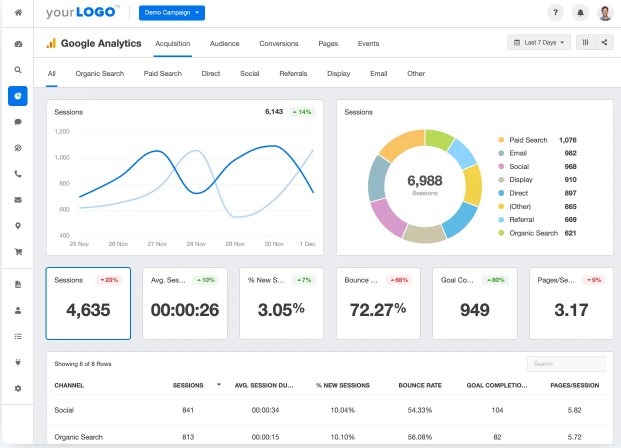
Google Analytics is comes in top one as a Free Digital Marketing Tools .This flagship offering from Google provides a wealth of data on website traffic, user behavior, conversion rates, and more. It’s essential for understanding your audience and optimizing your online presence.

Key Features:

  1. Traffic Analysis: Google Analytics tracks and reports on website traffic, offering detailed information on the number of visitors, page views, and sessions.

  2. User Behavior: Gain valuable insights into how users interact with your website. This includes metrics like bounce rate, session duration, and pages per session.

  3. Conversion Tracking: Monitor and measure the effectiveness of your online marketing campaigns by tracking conversions. This could be a purchase, form submission, or any other desired action.

  4. Audience Segmentation: Analyze your audience by demographic information, location, device used, and more. This helps in tailoring your content and marketing strategies to specific user segments.

  5. Acquisition Channels: Understand where your traffic is coming from. Google Analytics breaks down traffic sources into categories like organic search, paid search, social media, and more.

  6. Custom Reporting and Dashboards: Customize reports and dashboards to focus on specific metrics and KPIs that are most relevant to your business goals.

  7. E-commerce Tracking: For online retailers, Google Analytics offers comprehensive e-commerce tracking, providing insights into product performance, transaction details, and revenue.

  8. Site Speed Analysis: Evaluate how quickly your website loads for users, which is crucial for user experience and SEO.

  9. Goal Tracking: Set up specific goals (such as form submissions or newsletter sign-ups) and track their completion rates to measure the effectiveness of your website.

  10. Integration with Google Ads: Seamlessly connect Google Analytics with Google Ads to gain deeper insights into the performance of your paid advertising campaigns.

Canva is a Digital Marketing Tools which is versatile and user-friendly graphic design platform that has revolutionized the way individuals and businesses create visual content. With its intuitive interface and extensive library of templates and tools, Canva has become an essential resource for designers and non-designers alike.

Key Features:

  1. Template Library: Canva offers a vast collection of professionally designed templates for a wide range of purposes, including social media posts, presentations, posters, flyers, business cards, and more. These templates serve as a springboard for creativity, enabling users to customize and personalize designs with ease.

  2. Drag-and-Drop Interface: One of Canva’s standout features is its intuitive drag-and-drop interface. This allows users to effortlessly arrange elements, add text, images, shapes, and customize colors, making the design process seamless and enjoyable.

  3. Stock Images and Elements: Canva provides access to a vast library of high-quality stock photos, illustrations, icons, and graphics. This eliminates the need for users to source external images, ensuring that they have a wealth of visual resources at their fingertips.

  4. Customization Options: Users can fine-tune their designs with a range of customization options. These include adjusting colors, fonts, and layouts, as well as adding filters and effects to enhance the overall visual appeal.

  5. Collaboration and Sharing: Canva facilitates collaboration among team members or project stakeholders. Multiple users can work on a design simultaneously, and the platform allows for easy sharing and commenting on designs, streamlining the feedback process.

  6. Publishing and Exporting: Once a design is complete, Canva provides various options for sharing or downloading the final product. Users can export designs in a variety of formats, including PNG, JPEG, PDF, and more, ensuring compatibility with different platforms and applications.

3. Buffer:

buffer

Buffer is a versatile and user-friendly social media management platform that empowers individuals and businesses to streamline their online presence across various social media platforms. Buffer comes under the top 5 Digital Marketing Tools , it offers a range of features designed to enhance social media marketing strategies and engagement with the target audience.

Key Features of Buffer:

  1. Content Scheduling:

    • Buffer allows users to schedule posts in advance, ensuring a consistent and timely presence on platforms like Facebook, Twitter, LinkedIn, Instagram, and Pinterest.
  2. Multi-Platform Management:

    • It supports management across multiple social media platforms from a single dashboard, providing a unified view of all activities.
  3. Post Analytics:

    • Users can track the performance of their posts with detailed analytics. This includes metrics like engagement rates, clicks, reach, and more, enabling data-driven decision-making.
  4. Customizable Posting Calendar:

    • Buffer offers a customizable posting calendar, helping users plan and organize their content distribution effectively.
  5. Team Collaboration:

    • For businesses and agencies, Buffer allows team members to collaborate on social media strategies, with options for approvals and role-based access.
  6. Content Suggestions:

    • Buffer provides content recommendations and suggests optimal posting times based on audience engagement patterns.
  7. RSS Feed Integration:

    • Users can integrate their preferred RSS feeds to easily discover and share relevant content with their audience.
  8. Browser Extension:

    • The Buffer browser extension allows for seamless content curation and scheduling directly from the web.
  9. Mobile App:

    • Buffer offers a mobile app, enabling users to manage their social media presence on the go.
  10. Integration with Third-Party Tools:

    • Buffer integrates with a range of other marketing and content management tools, offering enhanced capabilities and flexibility.

MailChimp is a renowned email marketing platform that has become a staple for businesses and marketers worldwide. With its user-friendly interface and a suite of powerful features, MailChimp empowers users to create, send, and track email campaigns with ease.

Key Features:

  1. Email Campaign Creation:

    • MailChimp is comes under a Digital Marketing Tools offers a range of customizable templates to design visually appealing emails. Whether you’re promoting products, sharing updates, or sending newsletters, the platform provides a seamless creation process.
  2. Segmentation and Targeting:

    • Users can segment their email lists based on various criteria like demographics, behavior, and preferences. This ensures that your messages reach the right audience, increasing the likelihood of engagement.
  3. Automation:

    • Automate your email marketing efforts with features like autoresponders and drip campaigns. Set triggers based on user actions to send timely and relevant messages.
  4. Analytics and Reporting:

    • Gain valuable insights into your campaign performance. Track open rates, click-through rates, conversion rates, and more. Use this data to refine your strategies for better results.
  5. A/B Testing:

    • Test different elements of your emails, such as subject lines, content, and visuals, to understand what resonates best with your audience. Optimize campaigns for maximum impact.
  6. Integration with Other Platforms:

    • MailChimp seamlessly integrates with various third-party tools and platforms, including CRMs, e-commerce platforms, and social media. This allows for a unified marketing ecosystem.
  7. Compliance and Security:

    • MailChimp places a strong emphasis on data security and compliance with regulations like GDPR. Users can have confidence that their data and campaigns are handled with the utmost care.
  8. Mobile Optimization:

    • Ensure your emails look great on all devices. MailChimp automatically optimizes emails for mobile, providing a seamless user experience.
  9. A/B Testing:

    • Test different elements of your emails, such as subject lines, content, and visuals, to understand what resonates best with your audience. Optimize campaigns for maximum impact.
  10. Free Plan and Scalability:

    • MailChimp offers a free plan that caters to the basic needs of small businesses and individuals. As your marketing efforts grow, you can seamlessly transition to paid plans with advanced features.
Keyword Planner (Google Ads):

Keyword Planner is an indispensable tool within the Google Ads platform, specifically designed to assist advertisers in conducting comprehensive keyword research. It plays a pivotal role in shaping effective search engine marketing (SEM) and search engine optimization (SEO) strategies. Here are the key features and functions of the Keyword Planner:

  1. Keyword Research:

    • Functionality: Keyword Planner is a free Digital Marketing Tools which helps users discover new keywords and phrases that are relevant to their products, services, or content. It offers suggestions based on seed keywords, website URLs, or product categories.
  2. Search Volume Data:

    • Insights: The tool provides valuable insights into the average monthly search volumes for specific keywords. This data is crucial for understanding the popularity and demand for particular search terms.
  3. Competition Level:

    • Insights: Keyword Planner also offers a snapshot of the competition level for each keyword. This metric indicates how many advertisers are bidding on a particular keyword, giving insights into its competitiveness.
  4. Bid Estimates:

    • Pricing Information: It provides estimated bid amounts for keywords, which is essential for budgeting and planning advertising campaigns. This feature helps advertisers set realistic bids to maximize their ad visibility.
  5. Keyword Grouping:

    • Functionality: Keyword Planner allows users to organize keywords into ad groups. This helps in creating more targeted and relevant ad campaigns, improving ad quality scores, and ultimately driving better results.
  6. Location and Language Targeting:

    • Customization: Advertisers can refine their keyword research based on specific geographic locations and language preferences. This ensures that campaigns are tailored to reach the right audience.
  7. Historical Metrics:

    • Insights: Users can access historical data on keyword performance, including trends in search volume over time. This information aids in making informed decisions about keyword selection.
  8. Seasonal Trends:

    • Insights: Keyword Planner provides insights into seasonal trends, allowing advertisers to adjust their strategies based on fluctuations in search behavior throughout the year.
  9. Filtering and Sorting:

    • Usability: The tool offers various filters and sorting options to help users refine their keyword lists based on specific criteria, such as competition level, search volume, and more.
  10. Integration with Google Ads:

    • Seamless Workflow: Keyword Planner seamlessly integrates with Google Ads accounts, making it easy for advertisers to transfer their chosen keywords directly into their ad campaigns.

Conclusion

These free tools cover a wide range of essential aspects in digital marketing, from analytics and social media management to design and content creation. Incorporating them into your toolkit can significantly enhance your marketing efforts without straining your budget. Remember, while these tools offer free versions, they may also have premium plans with additional features for those seeking more advanced functionalities.

FAQ'S

Career in Digital Marketing, Course Fees & Fresher Salary in India

Career in Digital Marketing, Course Fees & Fresher Salary in India

Blog

Explore a Career in Digital Marketing

A career in digital marketing means working in a job where you help companies promote their products or services on the internet. This includes things like websites, social media, and online ads.

It’s a job that lets you use your creativity and computer skills to reach a big audience. You get to be a part of the online world and make sure people know about cool stuff!

Digital marketing is super important because so many people use the internet. So, companies really need experts to help them connect with customers online. Plus, it’s a field that’s always changing and growing, so there’s always something new to learn! If you like being online and coming up with creative ideas, a career in digital marketing could be just right for you!

Steps for Career Growth in Digital Marketing

digital marketing growth
  1. Learn the Basics: Start by understanding the fundamentals of digital marketing. This includes knowing about websites, social mediaemail marketing, and search engines.

  2. Take a Course or Training: Enroll in a digital marketing course. This will teach you more in-depth skills and give you practical experience.

  3. Practice and Experiment: Try out what you’ve learned. Create your own social media profiles, write blogs, or try running a small ad campaign.

  4. Specialize in a Niche: Focus on an area you enjoy, like content writing, social media management, or SEO. Becoming an expert in a specific field can lead to more opportunities.

  5. Stay Updated: Digital marketing is always changing. Keep learning about new tools and techniques to stay ahead.

  6. Build a Portfolio: Showcase your work. Create a portfolio with examples of campaigns you’ve worked on or content you’ve created.

  7. Network and Connect: Join digital marketing communities online. Networking can lead to job opportunities or collaborations.

  8. Apply for Internships or Entry-Level Positions: Look for internships or entry-level jobs in digital marketing. This will give you practical experience and help you build connections.

  9. Show Initiative and Take on Responsibilities: Be proactive. Volunteer for tasks and show you’re willing to take on more responsibilities.

  10. Measure Your Success: Learn how to track the performance of your campaigns. Understanding metrics like website traffic or conversion rates is crucial.

  11. Seek Feedback and Learn from Mistakes: Don’t be afraid to ask for feedback. Learn from any mistakes and use them as opportunities to grow.

  12. Set Goals and Keep Growing: Have clear goals for your career. Whether it’s becoming a manager or starting your own agency, keep working towards it.

Remember, growth in digital marketing takes time and effort. Keep learning, stay curious, and be persistent. You’ll see your career progress over time.

How much the Course Fees of Digital Marketing?

Course fees are the amount of money you need to pay to take a specific course or class. It’s like the ticket price for joining a learning adventure! These fees help cover the costs of teaching materials, instructors, and facilities.

Sometimes, courses are free, especially online ones. Other times, like in universities or specialized schools, there might be a cost. This is because they provide structured and in-depth learning experiences with expert teachers.

Remember, it’s important to check and understand the fees before signing up for a course. This way, you can plan your budget and make sure the course fits your needs and resources. Happy learning!

Digital Marketing Freshers Salary in India

digital marketing salary

When you start a new job with little or no work experience, you’re called a “fresher.” In India, the salary for freshers can vary depending on the job and the place where you work.

On average, a fresher can earn anywhere from ₹10,000 to ₹25,000 per month. This amount can be different in big cities compared to smaller towns. It’s important to remember that as you gain experience and learn more, your salary can increase too.

While it’s exciting to earn your own money, what’s more important is the opportunity to learn and grow in your career. So, don’t worry too much about the exact number right now. With hard work and dedication, you’ll have the chance to earn more as you go along!

FAQ'S

What is digital marketing? Explain with examples.

What is digital marketing? Explain with examples.

Blog

Digital Marketing: Simplified Explanation with Examples

Digital marketing is a way of using the internet to let people know about products or services. It’s like a supercharged megaphone for businesses to reach a lot of people online and share what they have to offer. Digital marketing encompasses a broad range of online activities aimed at promoting and selling products or services. It leverages digital channels such as search engines, social media, email, websites, and more to connect with current and potential customers. Below, we’ll explain key components of digital marketing with illustrative examples:

Let's dive into some everyday examples to make it clearer:

  1. Social Media Ads: Think about when you’re scrolling through a site like Facebook or Instagram. Sometimes, you come across posts that showcase cool products or services. That’s digital marketing in action. Companies pay to show you these posts because they believe you might be interested.

  2. Search Engine Results: When you type something into a search engine like Google, you get a list of websites that are related to what you’re looking for. The ones at the very top are often there because they paid to be. This is another form of digital marketing.

  3. Email Offers: Have you ever received an email from a store telling you about a sale or a special offer? That’s digital marketing too. They’re using email to let you know about their exciting deals.

  4. YouTube Commercials: Picture this: you’re watching a video on YouTube, and before or during the video, a short ad pops up. Companies pay to put those ads there, hoping you’ll be interested in what they’re offering.

  5. Website Pop-ups: When you visit a website, sometimes a little box will appear offering you something valuable, like a discount or a free guide. This is yet another example of digital marketing in action.

  6. Online Contests or Giveaways: Have you ever entered a contest online where you have a chance to win something? Companies organize these events to grab your attention and introduce you to what they have to offer.

2. Real-world example

digital marketing real world example

Company Profile:

Name: TrendyTech Solutions
Industry: Information Technology and Software Development
Location: Silicon Valley, California
Years in Business: 5 years

Challenge:

TrendyTech Solutions was a relatively young company in the competitive IT industry. While they had a talented team and innovative solutions, they struggled with visibility and lead generation. Their challenge was to increase brand awareness and generate more qualified leads to sustain and accelerate growth.

Digital Marketing Strategy:

  1. Website Optimization:

    • TrendyTech revamped their website, making it user-friendly and ensuring it was mobile-responsive. They optimized it for search engines (SEO) to improve visibility on Google.
  2. Content Marketing:

    • They started a blog providing valuable insights into software development, technology trends, and best practices. This content was shared on their website and promoted through social media.
  3. Social Media Engagement:

    • TrendyTech focused on platforms like LinkedIn, Twitter, and Facebook where their target audience, which consisted of tech professionals and decision-makers, were active. They regularly posted informative content, engaged with their audience, and ran targeted ad campaigns.
  4. Email Marketing Campaigns:

    • They created a segmented email list and sent out newsletters featuring the latest blog posts, company updates, and exclusive offers. This helped nurture leads and keep their audience engaged.
  5. Pay-Per-Click (PPC) Advertising:

    • They ran Google Ads campaigns targeting specific keywords related to their services. This ensured that they appeared at the top of search results when potential clients were looking for IT solutions.

Results:

  1. Increased Website Traffic:

    • Over a span of six months, TrendyTech saw a 40% increase in website traffic. This was a direct result of their improved SEO efforts and engaging content.
  2. Lead Generation Boost:

    • The number of leads generated through their website increased by 60%. The combination of targeted content and PPC campaigns proved highly effective.
  3. Improved Conversion Rates:

    • Through continuous A/B testing and optimization, TrendyTech was able to increase their website’s conversion rate by 20%.
  4. Enhanced Brand Awareness:

    • Their social media presence grew significantly, resulting in a 50% increase in brand mentions and discussions in relevant online communities.
  5. ROI on Ad Spend:

    • The ROI on their Google Ads campaigns was an impressive 300%, showing that their investment in paid advertising was delivering substantial returns.
    • Conclusion:

      This case study of TrendyTech Solutions exemplifies how a strategic approach to digital marketing can be a powerful catalyst for business growth. By leveraging various digital channels, optimizing their online presence, and delivering valuable content, they were able to significantly increase brand visibility, generate leads, and ultimately drive revenue. This success story underscores the importance of a well-planned digital marketing strategy in today’s competitive business landscape.

FAQ'S

Which is better digital marketing or social media marketing?

Which is better digital marketing or social media marketing?

Blog

Choosing Between Digital Marketing and Social Media Marketing: Which Is Right for You?

Introduction to Digital Marketing Vs Social Media Marketing

In today’s fast-paced digital world, businesses often grapple with the dilemma of selecting the best approach to connect with their audience. Two main contenders in this arena are digital marketing and social media marketing. This article will guide you through these strategies, focusing on their strengths, weaknesses, and which might suit your specific goals.

Digital Marketing Vs Social Media Marketing

Digital Marketing Vs Social Media Marketing

Digital marketing encompasses a broad range of online tactics to promote a product or service. It includes activities like search engine optimization (SEO), email marketing, content marketing, and pay-per-click advertising. Digital marketing is like the big umbrella that covers various online strategies.

On the other hand, social media marketing is a specific subset of digital marketing that focuses on using social platforms like Facebook, Instagram, and Twitter to reach and engage with the target audience. It involves creating content, running ads, and interacting with followers to build brand awareness and drive sales.

In summary of Digital Marketing Vs Social Media Marketing, digital marketing is the larger strategy, while social media marketing is a specific element within it, primarily centered around social networks. Both are essential for a comprehensive online marketing approach, but they serve different purposes.

Understanding Digital Marketing

The Versatility of Digital Marketing

Digital marketing is a flexible approach, including various strategies like search engine optimization (SEO), content marketing, email marketing, and pay-per-click advertising. Its adaptability allows businesses to tailor their approach to their unique needs.

SEO: The Backbone of Digital Marketing

Delve deeper into SEO, a crucial aspect of digital marketing. We will discuss the significance of organic search rankings, keywords, and how it can improve your online presence.

Content Creation Matters

Explore the world of content marketing. Learn how creating valuable and informative content can attract and retain customers, ultimately boosting sales.

Exploring Social Media Marketing

The Influence of Social Media

Social media marketing uses platforms like Facebook, Twitter, Instagram, and LinkedIn to connect with an audience. Find out how these platforms can help businesses establish their brand and interact with customers.

The Power of Visual Content

Visual content, like images and videos, has become a vital part of social media marketing. This section will discuss the impact of visual storytelling on social platforms.

Engaging with the Audience

Discover the art of engaging with your audience on social media. We’ll discuss the importance of two-way communication, responding to feedback, and fostering a loyal community.

Comparing ROI and Analytics

Measuring Success in Digital Marketing

Discuss the various tools and metrics used to measure the return on investment (ROI) in digital marketing campaigns. Understand how data-driven decisions can enhance your marketing strategies.

Analyzing Social Media ROI

Explore the unique challenges and advantages of measuring ROI in social media marketing. Learn how to track engagement, conversions, and brand loyalty on these platforms.

Tailoring Your Marketing Approach

Defining Your Marketing Goals

Understanding the importance of setting clear objectives for your marketing campaigns. We’ll discuss how Digital Marketing Vs Social Media Marketing can align with your business goals.

The Hybrid Approach

Discover the advantages of combining digital marketing and social media marketing to create a comprehensive marketing strategy.

Digital Marketing Company in Visakhapatnam

The Case for Digital Marketing

Why Choose Digital Marketing?

Digital marketing offers a wide array of tools and strategies that can be customized to fit your business needs. This approach can be particularly cost-effective for businesses with a well-defined target audience.

Digital marketing includes techniques like SEO, content marketing, email marketing, and pay-per-click advertising. These strategies allow you to fine-tune your marketing efforts based on your goals and budget.

The Power of SEO

Search engine optimization (SEO) plays a pivotal role in digital marketing. It involves optimizing your online content to rank higher on search engine results pages. This means that potential customers are more likely to discover your website when they search for related keywords.

Effective SEO involves keyword research, on-page optimization, and link building. By investing in SEO, you can enhance your online visibility, attract more organic traffic, and increase your chances of conversion.

Content Is Key

Content marketing is another cornerstone of digital marketing. It revolves around creating valuable, informative, and engaging content that resonates with your target audience.

Quality content not only helps you attract potential customers but also keeps them engaged and informed. Whether it’s blog posts, articles, or videos, content marketing helps build trust and authority in your industry.

digital

Analyzing the Digital Marketing ROI

Digital marketing offers a clear advantage when it comes to tracking ROI. Various tools and metrics allow you to measure the success of your campaigns with precision. Here are some key aspects to consider:

Website Traffic

You can track the number of visitors to your website and monitor their behavior. Analyzing this data can provide insights into the effectiveness of your marketing strategies.

Conversion Rates

Conversion tracking helps you determine how many visitors take a desired action on your site, such as making a purchase or filling out a contact form. By understanding conversion rates, you can optimize your content and user experience to improve results.

Revenue Increase

The ultimate goal of marketing is to boost revenue. Digital marketing allows you to measure the direct impact of your strategies on your bottom line. By analyzing the increase in revenue attributable to your marketing efforts, you can make informed decisions about budget allocation.

The Case for Social Media Marketing

Why Choose Social Media Marketing?

Social media marketing is a powerful tool for building brand awareness and engaging with your audience. It leverages platforms like Facebook, Twitter, Instagram, and LinkedIn to create a direct connection with potential customers.

One of the primary advantages of social media marketing is its ability to foster two-way communication. You can respond to feedback, address customer concerns, and create a loyal community around your brand.

The Visual Impact

Visual content is king on social media. Images, videos, and infographics are highly shareable and engaging. Using visual storytelling can help your brand stand out and connect with a broader audience.

Building Brand Loyalty

Social media is an excellent platform for building brand loyalty. Regular interaction with your audience, sharing valuable content, and providing exceptional customer service can turn casual followers into loyal advocates of your brand.

Analyzing Social Media ROI

Measuring ROI in social media marketing can be more complex than in digital marketing. However, it offers unique advantages:

Engagement Metrics

Social media provides a wealth of engagement metrics, such as likes, comments, shares, and click-through rates. These metrics help you gauge the impact of your social media efforts and understand what content resonates with your audience.

Conversions and Lead Generation

While social media is often more about building relationships and trust, it can also drive conversions and lead generation. By tracking conversion events, such as sign-ups or downloads, you can measure the ROI of your social media campaigns.

Brand Loyalty

Brand loyalty is a valuable, long-term indicator of the success of your social media efforts. Track customer retention, repeat purchases, and user-generated content to understand how loyal your audience is.

Tailoring Your Marketing Approach

Defining Your Marketing Goals

Before deciding between Digital Marketing Vs Social Media Marketing, it’s crucial to define your marketing goals. Your goals will drive your strategy.

Digital Marketing Goals

  • If your primary goal is to increase website traffic, generate leads, and improve conversion rates, digital marketing may be the right choice.

  • Businesses looking to boost online visibility and establish authority in their industry can benefit from effective SEO and content marketing.

Social Media Marketing Goals

  • If your goal is to create a strong brand presence, foster community engagement, and build brand loyalty, social media marketing is your go-to approach.

  • Social media marketing excels in visual content and two-way communication, making it ideal for those looking to connect directly with their audience.

The Hybrid Approach

In some cases, the most effective strategy might be a combination of Digital Marketing Vs Social Media Marketing. By harnessing the strengths of both approaches, you can create a comprehensive marketing strategy that maximizes your online presence and engages your target audience effectively.

Conclusion

Choosing between Digital Marketing Vs Social Media Marketing isn’t a one-size-fits-all decision. The right choice depends on your specific goals, target audience, and budget. Both approaches offer distinct advantages, with digital marketing excelling in precise measurement and cost-effectiveness, while social media marketing focuses on building brand loyalty and audience engagement. In many cases, combining these approaches can be the key to a successful online presence.

faq for seo
FAQ'S